












Scale your business with performance-driven campaigns designed to generate leads, increase conversions, and maximize ROI — without wasting budget on guesswork.
A structured guide to help you plan, launch, and optimize campaigns that deliver consistent leads, conversions, and measurable business growth.
We design, execute, and continuously optimize data-driven campaigns focused on measurable outcomes, helping you scale revenue while minimizing wasted ad spend.
We research, segment, and target high-intent audiences using behavioral data and insights to ensure your campaigns reach users most likely to convert.
We leverage automation and real-time data analysis to continuously refine campaigns, improving efficiency, lowering costs, and maximizing performance across all platforms.
We build strategic retargeting campaigns to re-engage users who showed interest, guiding them back into your funnel and increasing overall conversion rates.
We run integrated campaigns across multiple channels to expand reach, maintain consistent messaging, and ensure optimal performance across your entire marketing ecosystem.
Performance marketing focuses only on measurable outcomes like leads and sales, ensuring every campaign decision is backed by real-time data and performance metrics.
Most campaigns begin generating data within days, with noticeable improvements and optimized performance achieved within a few weeks of consistent testing.
We run campaigns across platforms like Google, Meta, and others, selecting the best channels based on your audience, industry, and business goals.
We continuously test creatives, refine targeting, and optimize bidding strategies using data insights to improve efficiency, reduce costs, and increase conversions.
We eliminate underperforming ads, refine targeting, and allocate budget to high-performing segments to ensure maximum ROI and minimal unnecessary spending.
Tell us about your goals—we’ll craft a strategy that delivers real results.
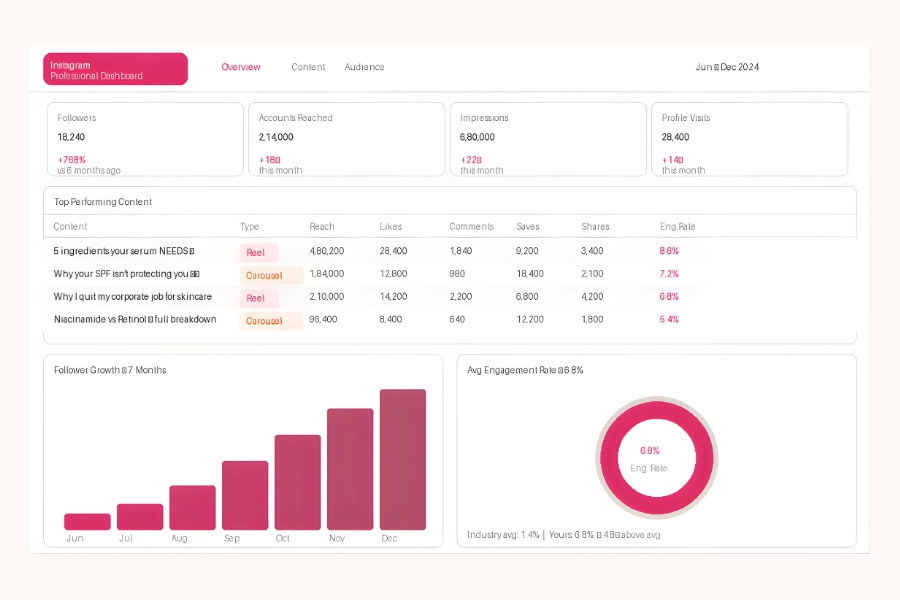
From a brand nobody had discovered to a community people were recommending to their friends.
01 · CLIENT OVERVIEW
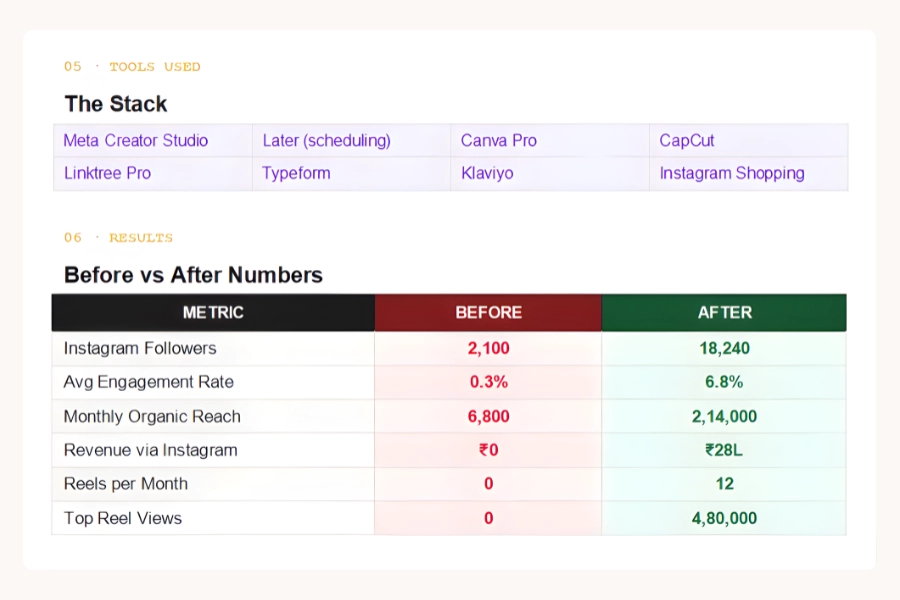
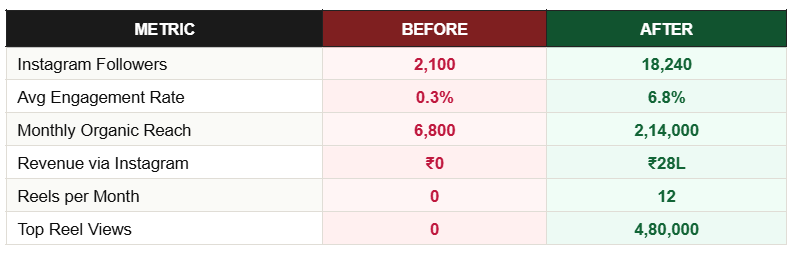
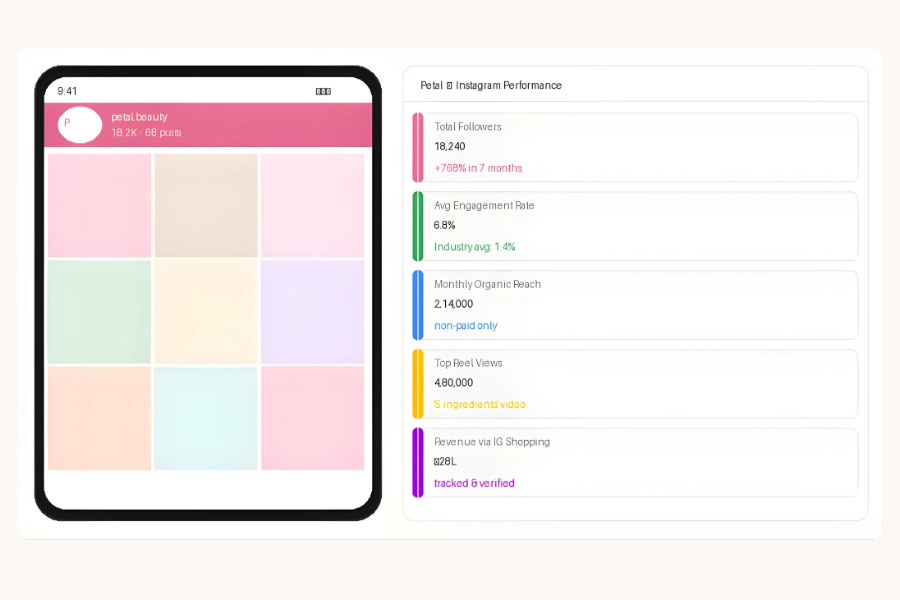
Petal is an indie beauty startup — two founders, clean ingredients positioning, genuinely excellent products, and essentially no marketing. They had 2,100 followers when we started, near-zero reach, and a founder posting inconsistently whenever she found time. The products had earned 4.8-star reviews but nobody outside their immediate circle had heard of the brand.
02 · PROBLEM STATEMENT
The brand had no content identity, no posting system, and no strategy connecting social media to sales. What posts did exist were flat-lay product images that looked identical to every other indie beauty brand. The founder had no time, no brief, and no creative framework. There was no link-in-bio strategy and Instagram Shopping wasn't set up.
03 · STRATEGY
We repositioned Petal from 'product showcase' to 'ingredient intelligence meets real-woman narrative.' The insight: conscious beauty buyers research before they buy. They want to understand what's in the bottle, why it works, and whether the brand is run by people who actually care. Education-first content builds that trust without ever selling. We used a 3-pillar system: Ingredient Intel, Real Skin Stories, and The Formula.
Beauty is a high-trust, high-consideration category. A follower who saves your 'Why niacinamide at 5% works' post has spent 40 seconds thinking about your product. That's 40 seconds of unprompted consideration you didn't pay for. Saves are the highest-intent action on Instagram and extend organic reach algorithmically. Teaching is the most efficient form of selling.
04 · EXECUTION
05 · TOOLS USED
06 · RESULTS
◈ Portfolio Design Directions (For Behance / Designer)
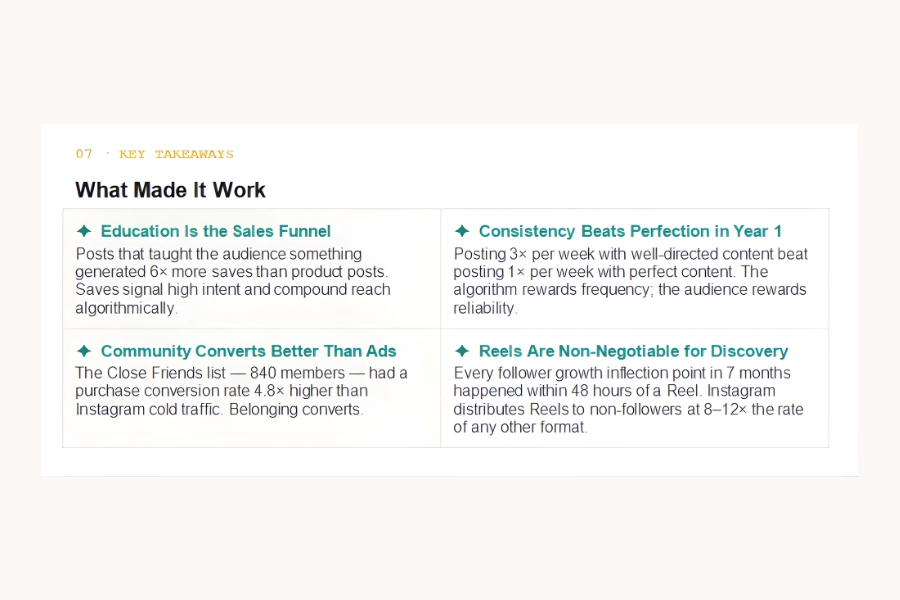
07 · KEY TAKEAWAYS
Posts that taught the audience something generated 6× more saves than product posts. Saves signal high intent and compound reach algorithmically.
Posting 3× per week with well-directed content beat posting 1× per week with perfect content. The algorithm rewards frequency; the audience rewards reliability.
The Close Friends list — 840 members — had a purchase conversion rate 4.8× higher than Instagram cold traffic. Belonging converts.
Every follower growth inflection point in 7 months happened within 48 hours of a Reel. Instagram distributes Reels to non-followers at 8–12× the rate of any other format.
Screenshots


The traffic was never the problem. The funnel was the problem — and it was haemorrhaging at every single stage.
01 · CLIENT OVERVIEW
Forge is a funded D2C nutrition brand — protein supplements, health snacks, electrolyte drinks — spending ₹5Cr/month on paid acquisition. Strong brand awareness, high repeat purchase rate, but conversion benchmarks consistently 35–40% below category averages. The CEO knew there was leakage — just not where.
02 · PROBLEM STATEMENT
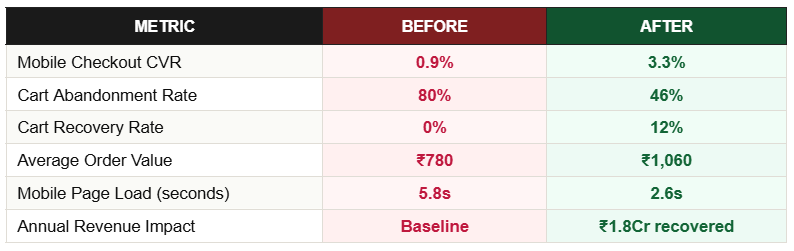
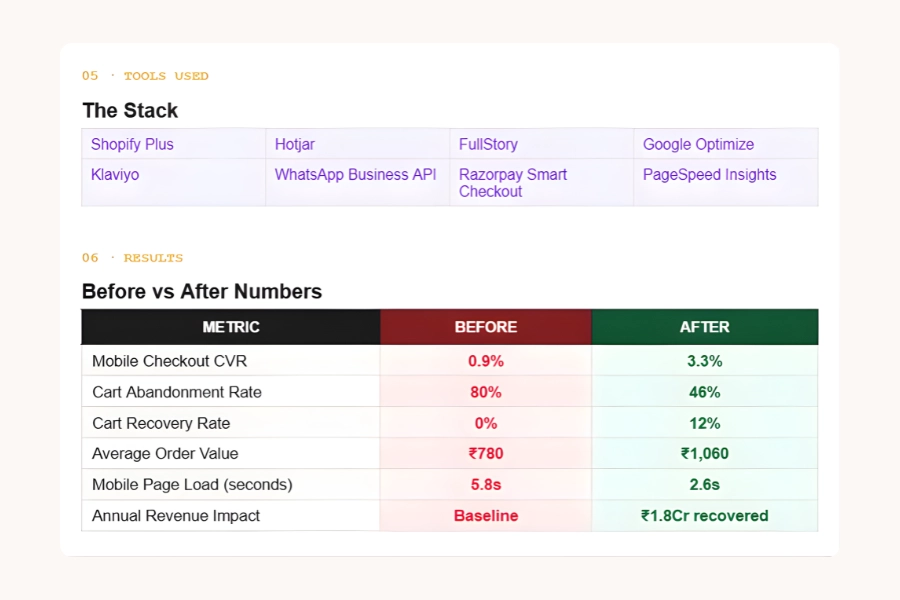
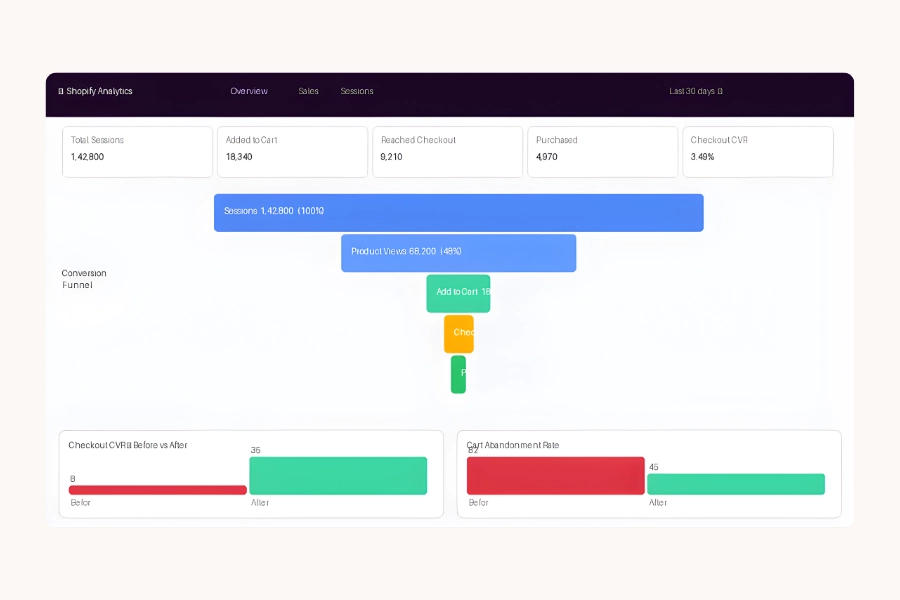
A ₹5Cr/month traffic budget was feeding a funnel that converted at 0.9% on mobile — against an industry average of 2.4%. The mobile checkout had 11 form fields. There was no cart recovery sequence. Product pages were beautiful but led with ingredient lists rather than outcomes. The brand had never run a structured CRO audit.
03 · STRATEGY
We ran a complete CRO audit before touching a single element: heatmaps to find where attention was lost, session recordings to find where users hesitated, and funnel analytics to quantify drop-off at each stage. Only after building the full picture did we prioritise fixes by impact-to-effort ratio. High-impact, low-effort changes first. A/B tests on every significant change before full rollout.
At ₹5Cr monthly ad spend, even a 0.5% improvement in checkout conversion rate generates significant incremental monthly revenue — with no additional acquisition cost. Funnel optimisation at scale has the highest ROI of any marketing activity. The traffic is already paid for.
04 · EXECUTION
05 · TOOLS USED
06 · RESULTS
◈ Portfolio Design Directions (For Behance / Designer)
07 · KEY TAKEAWAYS
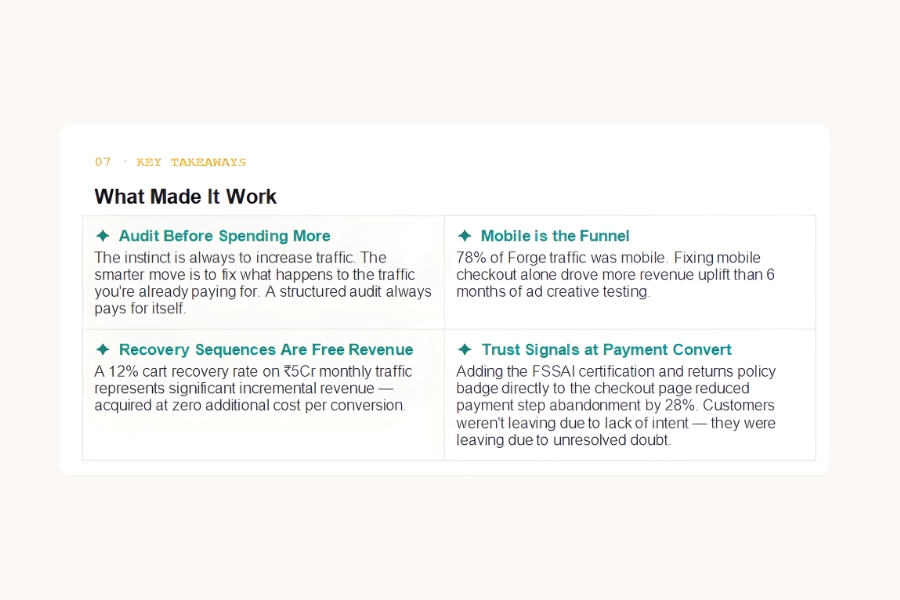
The instinct is always to increase traffic. The smarter move is to fix what happens to the traffic you're already paying for. A structured audit always pays for itself.
78% of Forge traffic was mobile. Fixing mobile checkout alone drove more revenue uplift than 6 months of ad creative testing.
A 12% cart recovery rate on ₹5Cr monthly traffic represents significant incremental revenue — acquired at zero additional cost per conversion.
Adding the FSSAI certification and returns policy badge directly to the checkout page reduced payment step abandonment by 28%. Customers weren't leaving due to lack of intent — they were leaving due to unresolved doubt.
Screenshots


We stopped paying for traffic from students. We started paying for pipeline from decision-makers.
01 · CLIENT OVERVIEW
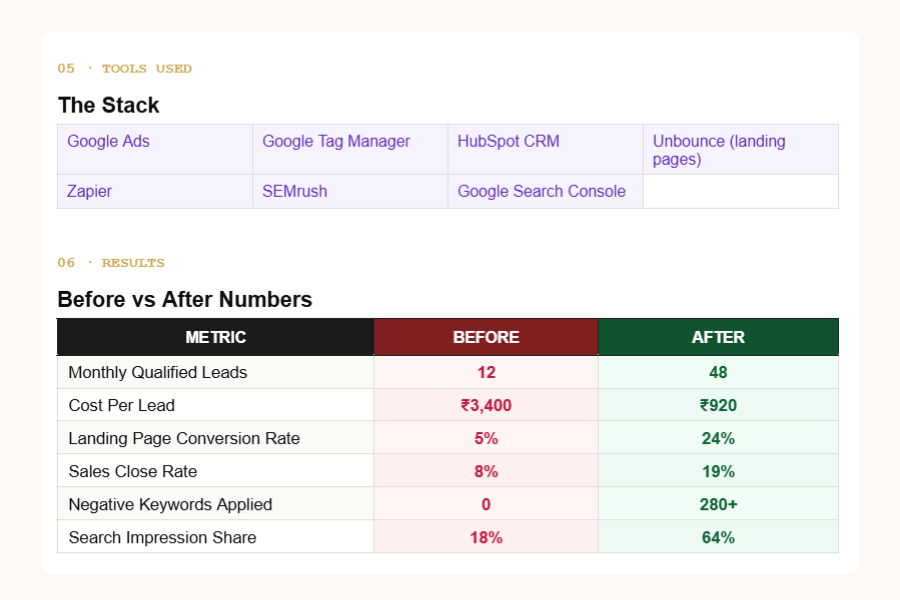
Velo is a B2B EdTech SaaS providing LMS and school management software to K–12 schools and coaching institutes across India. Series-A stage with a 4-person sales team. They were generating MRR but leaking heavily on acquisition — each qualified lead was costing far more than it should, and most leads weren't qualified at all.
02 · PROBLEM STATEMENT
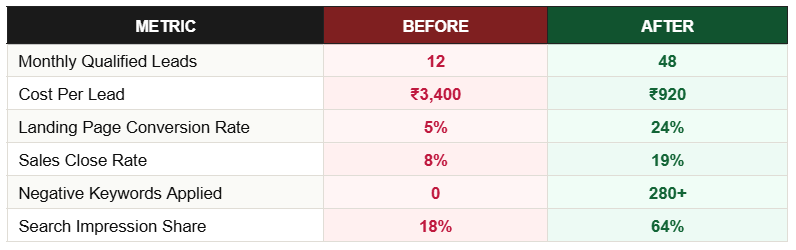
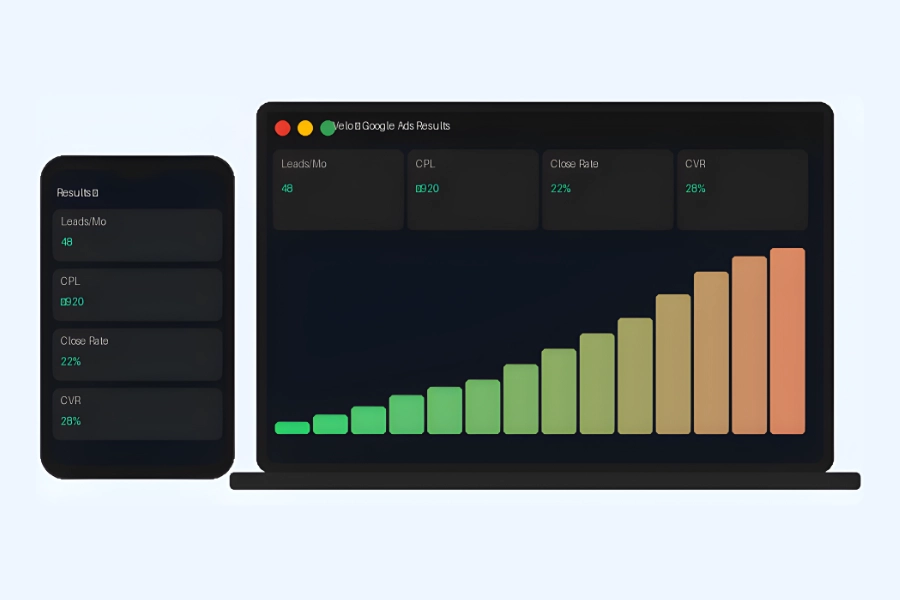
The Google Ads account was running broad-match keyword campaigns that were attracting students searching for study materials and tutoring — completely different from Velo's ICP of institute owners and school principals. Their landing page had no form above the fold, a generic 'Learn More' CTA, and a 5% conversion rate. Of 12 monthly leads, fewer than 4 would convert to demos.
03 · STRATEGY
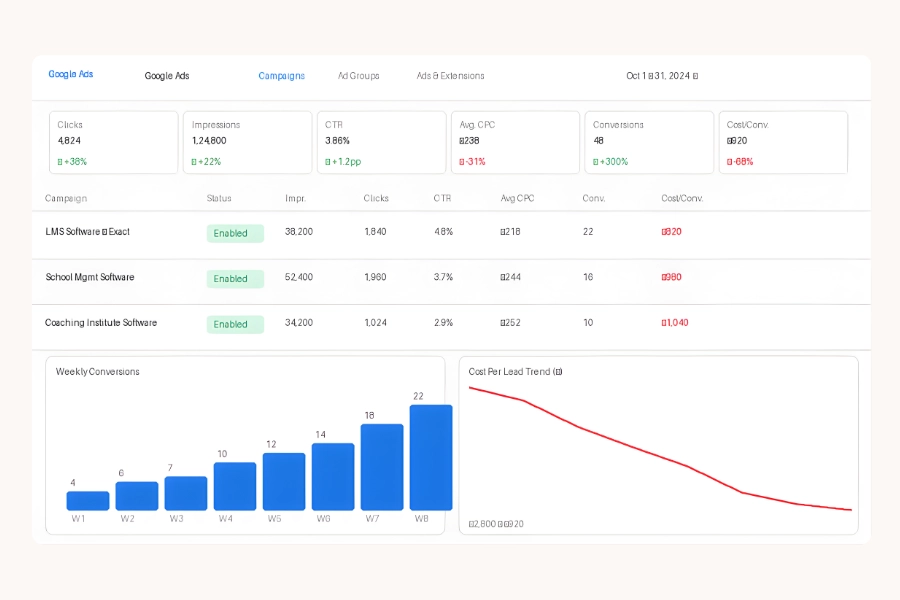
Two parallel workstreams: account restructure and landing page rebuild. The core insight was that B2B buyers in EdTech need to see specific, outcome-led claims ('manage 500 students without a single spreadsheet') rather than feature lists. We restructured the campaigns to use exact and phrase match only, built ICP-specific landing pages per campaign, and connected CRM-qualified leads back to Google Smart Bidding as conversion signals.
In B2B Google Ads, message-to-market match is the primary lever. An institute owner looking for LMS software will click a generic ad — but they convert only when the landing page speaks exactly to their pain (manual fee collection, parent communication, attendance tracking). We built dedicated pages for each keyword theme with relevant outcomes front and centre.
04 · EXECUTION
05 · TOOLS USED
06 · RESULTS
◈ Portfolio Design Directions (For Behance / Designer)
07 · KEY TAKEAWAYS
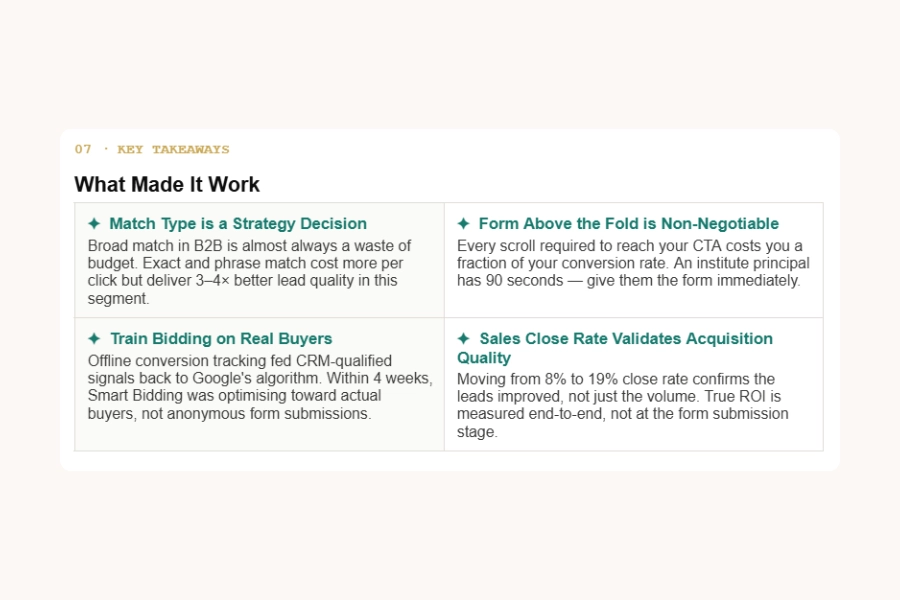
Broad match in B2B is almost always a waste of budget. Exact and phrase match cost more per click but deliver 3–4× better lead quality in this segment.
Every scroll required to reach your CTA costs you a fraction of your conversion rate. An institute principal has 90 seconds — give them the form immediately.
Offline conversion tracking fed CRM-qualified signals back to Google's algorithm. Within 4 weeks, Smart Bidding was optimising toward actual buyers, not anonymous form submissions.
Moving from 8% to 19% close rate confirms the leads improved, not just the volume. True ROI is measured end-to-end, not at the form submission stage.
Screenshots


We stopped burning budget and started building a brand that actually pays for itself.
01 · CLIENT OVERVIEW
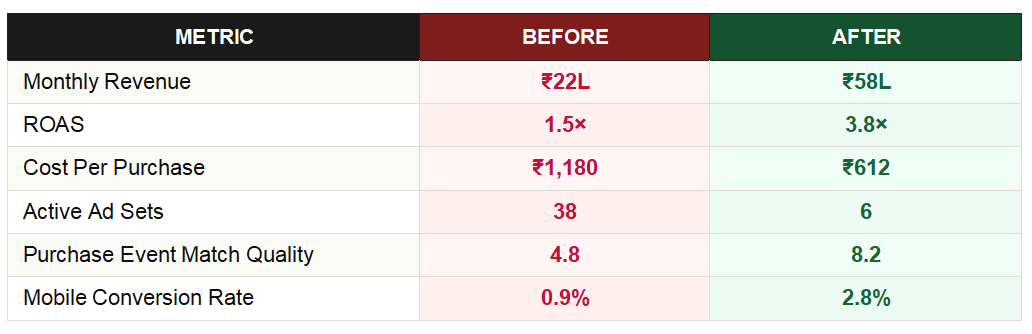
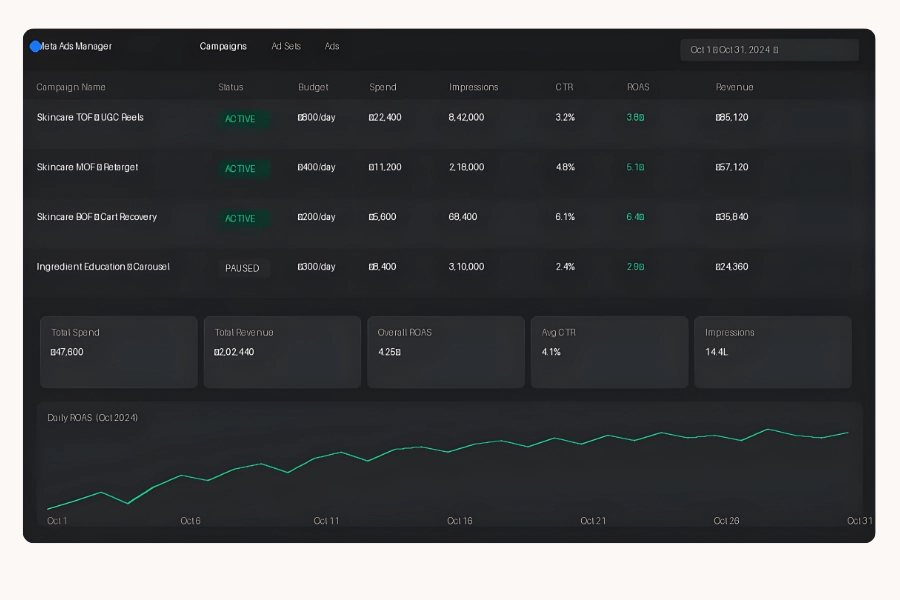
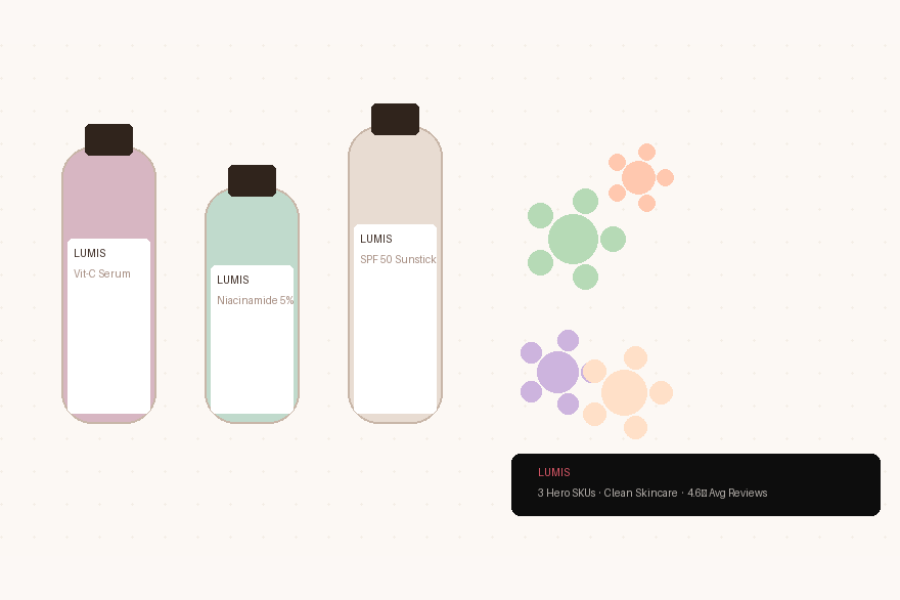
Nykora is a bootstrapped D2C skincare brand with three hero SKUs — a vitamin C serum, a niacinamide moisturiser, and an SPF sunstick — operating in the mass-premium segment. At two years old, they had strong product-market fit evidenced by 4.6-star reviews across 1,200+ orders. But they couldn't grow profitably past ₹22L/month despite steadily increasing Meta ad spend.
02 · PROBLEM STATEMENT
Nykora's Meta account was structurally broken before it was creatively weak. 38 ad sets ran simultaneously with no campaign organisation. Their Pixel had a purchase event misconfiguration — 40% of actual purchases went untracked. ROAS averaged 1.4–1.6×, below their breakeven of 2.2×. Every budget increase made losses worse, not better.
03 · STRATEGY
The diagnosis was structural before creative. Nykora had no working attribution, no campaign hierarchy, and no testing system. Our approach: restore tracking integrity first, then consolidate the account architecture so the algorithm receives clean signal, then build a UGC creative testing system. Scale only after all three foundations were in place.
04 · EXECUTION
05 · TOOLS USED
06 · RESULTS
◈ Portfolio Design Directions (For Behance / Designer)
07 · KEY TAKEAWAYS
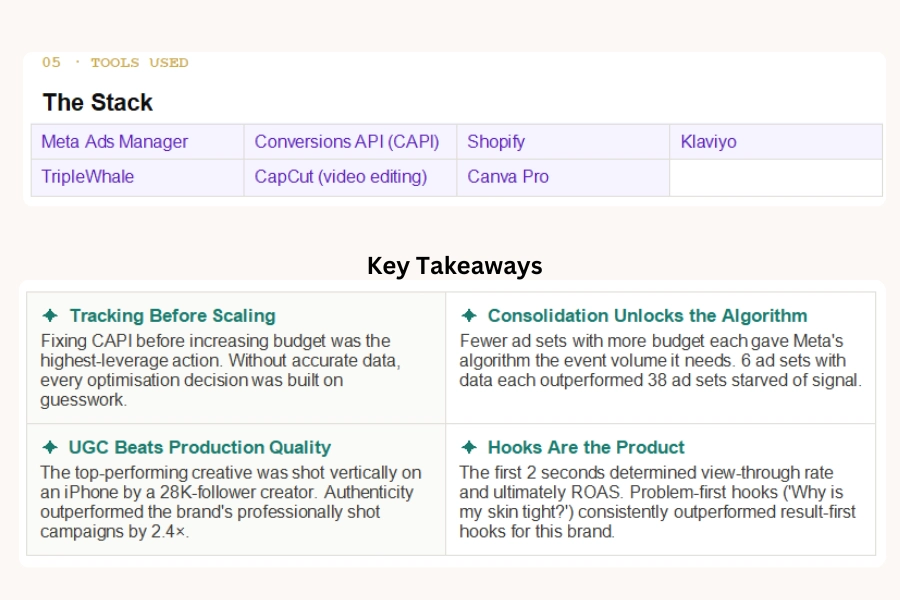
Fixing CAPI before increasing budget was the highest-leverage action. Without accurate data, every optimisation decision was built on guesswork.
Fewer ad sets with more budget each gave Meta's algorithm the event volume it needs. 6 ad sets with data each outperformed 38 ad sets starved of signal.
The top-performing creative was shot vertically on an iPhone by a 28K-follower creator. Authenticity outperformed the brand's professionally shot campaigns by 2.4×.
The first 2 seconds determined view-through rate and ultimately ROAS. Problem-first hooks ('Why is my skin tight?') consistently outperformed result-first hooks for this brand.
Screenshots